
|
Listen to the article
Getting your Trinity Audio player ready...
|
OSHA + CMMS: What Does "Compliance" Mean in Daily Work (Not on Paper)?
Industrial safety and regulatory compliance are fundamental elements in maintenance management. For maintenance managers, complying with OSHA, ISO 18000, and other regulations goes far beyond having documents signed or procedures on file. True compliance is evident in the daily routine, in the way teams work, manage risks, document activities and ensure worker protection.
Maintenance management software (CMMS) has become an indispensable tool to facilitate regulatory compliance, but the key is to integrate technology with safety culture and operational discipline. This article explores how compliance materializes on a day-to-day basis, beyond paper, and what are the best practices to achieve it. In addition, detailed examples of HSE are included to illustrate practical application.
What does OSHA and international standards require in maintenance?
- Identification and control of risks in maintenance tasks.
- Documentation of safe procedures and periodic audits.
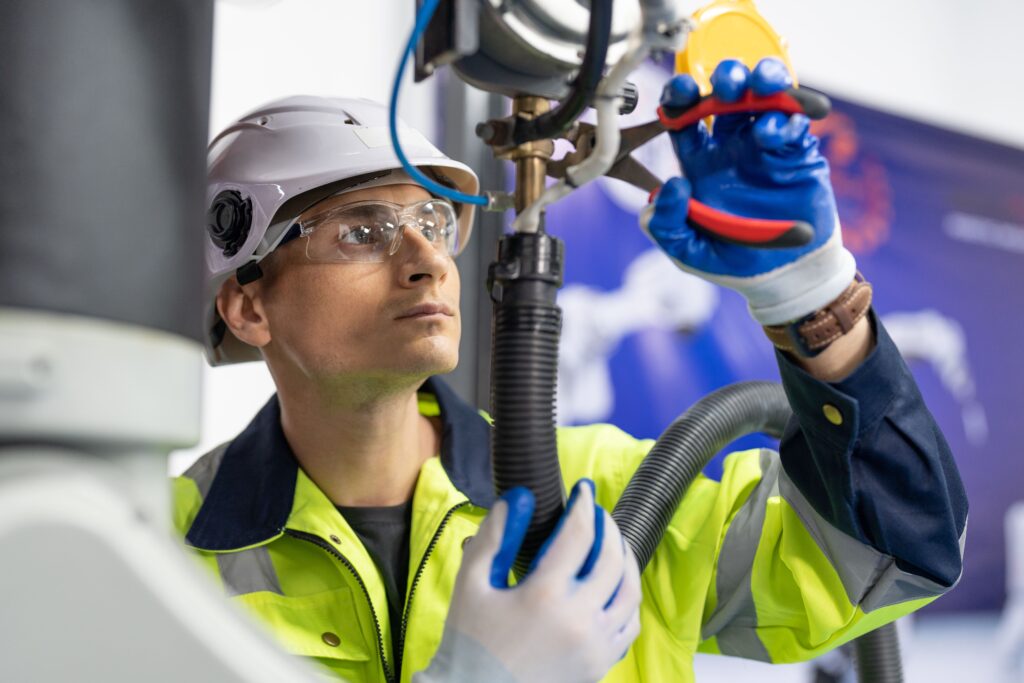
- Proper use of PPE and ongoing training of staff.
- Record of incidents, accidents and corrective actions.
- Regular inspections of equipment, tools, and work areas.
- Documented preventive and corrective maintenance, with traceability.
- Compliance with work permits, lockouts and tagouts (LOTO).
- Management of hazardous substances and waste in accordance with environmental standards.
From theory to practice: how does compliance materialize?
Effective compliance is evidenced in three key dimensions:
1.- Dynamic document management: Procedures must be available and updated. The team must access, consult and update documents from anywhere, ensuring that the information is current and available to everyone.
2.- Disciplined execution of tasks: Each maintenance activity must follow defined protocols, with real-time records and evidence of compliance (photos, signatures, digital checklists).
3.- Active safety culture: Risk prevention and the use of PPE should be integrated into the routine, not just in audits. Leadership and ongoing training are essential to maintaining discipline and protecting workers.
The Role of CMMS in Day-to-Day Compliance
Maintenance management software (CMMS) facilitates regulatory compliance by enabling:
- Document all maintenance activities with traceability.
- Generate work orders that include safety protocols and PPE use.
- Record inspections, incidents, and corrective actions.
- Control the training and certifications of personnel.
- Automate alerts for inspections, reviews, and permit expirations.
- Integrate internal and external audits into document management.
- Manage waste and hazardous substances in accordance with environmental regulations.
Practical examples of HSE in maintenance
1. Work Permits and Lockout/Tagout (LOTO)
Before intervening energized equipment, a work permit must be obtained, the lockout tagout must be recorded, and the procedure must be documented in the CMMS.
Example:
A technician must repair an electric motor. The procedure includes:
- Application and approval of work permit.
- Digital lockout tagout checklist.
- Photographic evidence of the padlock placed.
- Record of the date, time and person in charge.
- Release of the equipment after completing the task and verification of the removal of the lock.
This process ensures that the equipment is safe and that the intervention is traceable.
2. Hazardous substances and waste management
The handling of oils, lubricants, chemicals and waste must comply with environmental and safety regulations.
Example:
During the maintenance of a pump, used oils are extracted. The CMMS records:
- Identification of the waste.
- Quantity generated.
- Temporary storage place.
- Date of collection by authorized company.
- Evidence of final disposition in accordance with the standard.
This allows you to demonstrate environmental compliance and avoid penalties.
3. Safety inspections and audits
Regular inspections of areas, equipment, and tools are essential to prevent hazards and ensure safety.
Example:
Every week, the maintenance manager schedules an inspection of critical areas. The CMMS generates a checklist:
- PPE status.
- Condition of power tools.
- Dangerous area signage.
- Compliance with evacuation routes.
- Recording of findings and corrective actions.
The results are documented and alerts are generated to correct deviations.

Safety protocols in the maintenance routine
Compliance with OSHA and international standards requires that each task be executed under strict protocols.
Some examples of protocols integrated into the daily routine:
- Work Permits: Prior to intervening energized equipment, a permit must be obtained, lockout/tagout (LOTO) must be recorded, and the procedure must be documented in the CMMS.
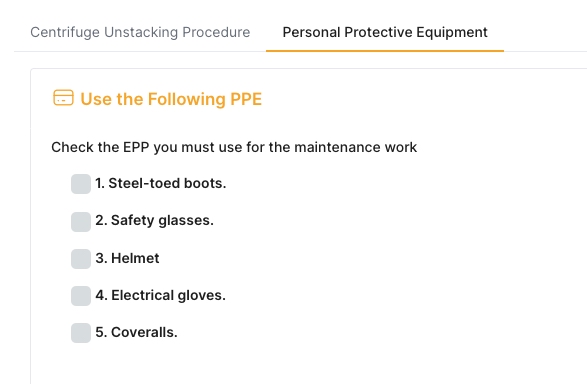
- Safety Checklists: Each work order includes a checklist of hazards, PPE needed, and critical steps.
- Pre- and post-inspections: Pre- and post-intervention inspections are documented, recording initial and final conditions.
- Training and competencies: The CMMS records technician training, ensuring that only authorized personnel perform critical tasks.
- Incident logging: Any incident or risk situation is documented immediately, generating corrective actions and follow-up.
PPE and Competency Management at the CMMS
The use of personal protective equipment (PPE) is mandatory in maintenance tasks, but compliance must be verifiable and documented.
The CMMS allows:
- Associate specific PPE to each type of work order.
- Record the delivery and use of PPE in each intervention.
- Manage PPE inventory, alerting about replenishment and expirations.
- Control staff certifications and competencies, linking training to authorization to perform tasks.
Technical example
Before performing maintenance on a turbine, the CMMS generates a work order that includes:
- List of required PPE (helmet, gloves, hearing protection).
- Safety checklist with critical steps.
- Record of the assigned technician’s competencies.
- Photographic evidence and digital signature at the end of the task.
This process ensures that compliance is real and verifiable, not just an administrative requirement.
Audits and traceability: beyond paper
Internal and external audits require evidence of compliance, but the real value is in daily traceability.
The CMMS facilitates:
- Automatic generation of compliance reports.
- Record of all interventions, inspections and incidents.
- Access to maintenance and PPE usage histories.
- Alerts for permit expirations, inspections, and certifications.
- Integration of audits into document management, allowing quick and efficient review.
Best practices for daily compliance
To ensure compliance is part of routine and not just a paper goal:
- Update procedures periodically: Review and adjust protocols according to regulatory changes and operational experiences.
- Train the team continuously: Training should be part of the routine, not just in audits.
- Integrate document management and execution: Use the CMMS to document and execute tasks, ensuring that each activity has evidence of compliance.
- Audit the routine, not just the documents: Conduct field audits, verifying that procedures are followed in practice.
- Foster a culture of safety: Leadership must promote discipline, the use of PPE, and risk prevention as core values.
- Manage waste and hazardous substances: Record and control the disposal of waste in accordance with environmental regulations.
- Monitor safety indicators: Analyze incident trends, inspection compliance, and PPE usage to identify opportunities for improvement.
Regulatory compliance in industrial maintenance goes far beyond archived documents.
It is materialized in daily discipline, in the execution of protocols, in rigorous documentation and in the active safety culture.
The CMMS is a key tool for integrating document management and execution, facilitating traceability, verification, and continuous improvement.
Adopting these practices allows maintenance managers to ensure worker protection, comply with international standards, and optimize operation.
Interested in delving deeper into safety, compliance, and maintenance management?
Check out other articles on our blog and find out how to integrate technology and safety culture into your daily routine.
No comment yet, add your voice below!